Bunpo: Language Learning
- 4.7
- Rating
- 1.00M
- Installs
- Free
- Price

 Analysis by App-foxy
I found Bunpo - Learn Japanese most useful when I treated it as a regular study companion rather than a complete Japanese course. Its lessons are short enough to fit around a normal day, but they still ask me to interact with the material instead of simply reading explanations. That makes it a practical choice for someone who wants a clear starting point, especially when grammar feels more intimidating than vocabulary apps make it seem.
This is an education app from Bunpo - Learn Japanese, available for free with optional in-app purchases ranging from $6.49 to $79.99 per item. It is rated for Everyone, works on Android 8.0 and later, and has reached over 1 million installs. The current version is 3.13.0, while its average rating sits at 4.7 from around 86 thousand ratings. Those figures suggest a well-established learning tool, but they do not replace trying its lesson style yourself. Japanese study is personal: an approach that keeps one learner engaged can feel repetitive to another.
How I used Bunpo as a daily Japanese study routine
My preferred starting routine was simple. I opened one lesson, worked through the explanation carefully, answered the exercises without rushing, and then stopped before the session became tiring. That last part matters. Japanese grammar often looks manageable when explained once, yet the details become harder when several new patterns arrive together. Short, repeatable sessions helped me notice where I was guessing rather than understanding.
You May Also Like

 Blood Strike: 2.5 Anniversary
Blood Strike’s Loadouts Turn Every Drop Into a Tactical Gamble
A close look at Blood Strike’s custom loadouts: how fast access to signature weapons reshapes its battle royale rhythm, rewards preparation, and narrows the gap between fights.

 Pandora - Music & Podcasts
Pandora’s Music Is Easy to Start, but Harder to Recover
Pandora’s strength is its low-effort path from a seed to a station. Its weak spot is how much confidence it asks you to place in connection, setup, and quiet recovery.

 8 Ball Pool
 Is Built on Rivalries, Rematches, and Routine
A close look at the rivalries, rematches, shared routines, and unanswered safety questions that turn a quick pool match into a persistent mobile community.

 Samsung Music
’s Quiet Strength Is Playing What You Already Own
Its reach comes less from spectacle than from dependable access to a personal library. That simplicity is both the app’s strongest retention engine and its ceiling.

 AccuWeather: Weather Radar
AccuWeather Review: A Quick, Clear Forecast for Everyday Decisions
For everyday plans, the best forecast is the one you can understand quickly. AccuWeather makes rain timing, radar, and local conditions easy to act on, with a few trade-offs.

 Hill Climb Racing
Why Hill Climb Racing Still Turns Crashes Into One More Run
A tiny car, a bumpy hill and one more upgrade: Hill Climb Racing keeps resurfacing because its simple chaos makes every near-miss feel personal.
More From Our News Desk



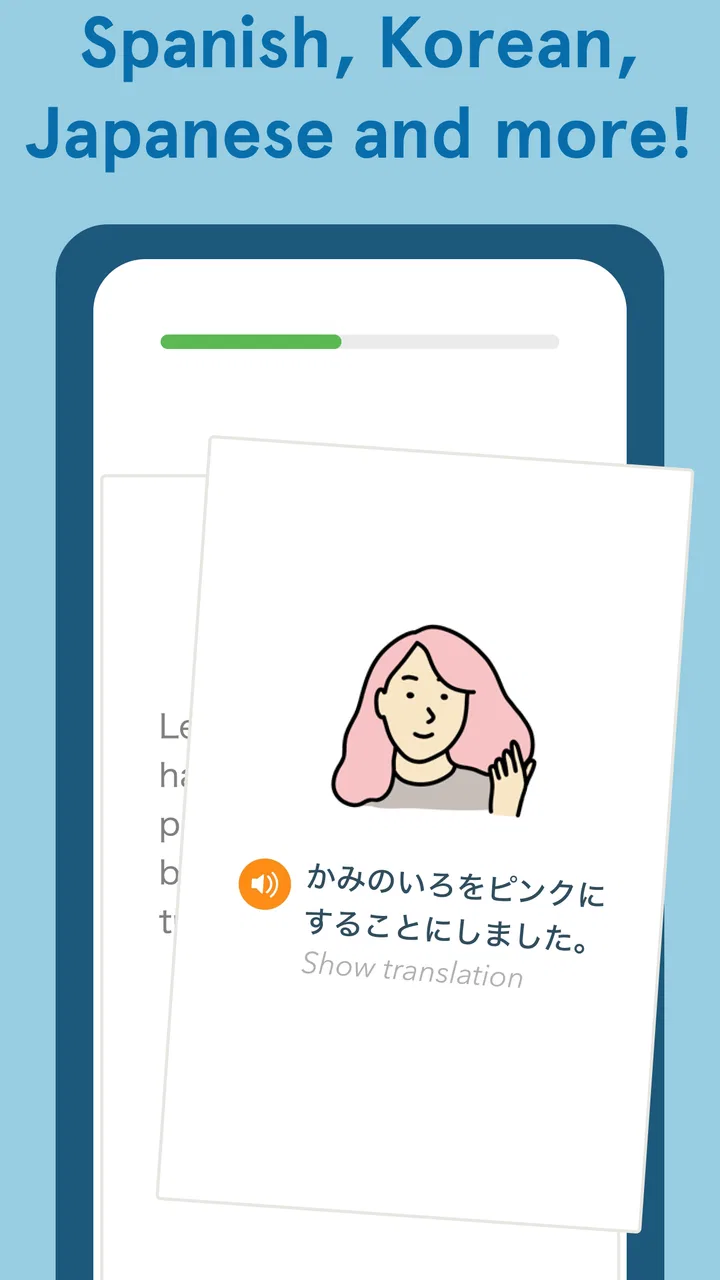
The app’s interactive format is more useful than a page of notes for checking whether I can actually recognize a pattern. I had to make decisions, not just nod along with an explanation. When I made a mistake, I used it as a signal to revisit the rule instead of immediately moving forward. This is one of the strongest reasons I would recommend Bunpo to beginners who need structure.
I would not use it as a passive background activity. Playing a lesson while distracted may create the feeling of progress without much retention. A better workflow is to keep a small notebook or digital note nearby and record only the points that caused trouble: a particle distinction, a verb form, or a sentence pattern that looked familiar but behaved differently in context. The app supplies the practice; a personal error log supplies continuity between sessions.
A realistic everyday session
Imagine having fifteen minutes before work or school. I would spend the first few minutes reviewing the previous lesson’s mistakes, then complete one focused section in Bunpo, and finish by saying a few example sentences aloud. If I had more time later, I would return to the same material rather than immediately opening a new topic. This approach is especially helpful for learners who tend to collect lessons faster than they can remember them.
For a traveler, the app can be useful during the preparation stage, when basic sentence patterns and reading practice are more valuable than trying to absorb an enormous course all at once. For someone preparing for a Japanese exam, it can support grammar drilling, but I would pair it with official-style practice and reading material. For a complete beginner, it offers a gentler path than opening a grammar reference with no sequence at all.
It is less suitable for a person whose main goal is spontaneous conversation. Interactive exercises can help me recognize and construct language, but conversation also demands listening speed, pronunciation practice, and the nerve to respond when a sentence is not perfectly familiar. I would add speaking exchanges, audio-focused study, or lessons with a human teacher for that goal.
What I would check before studying seriously
I recommend spending the first session exploring how lessons are organized and how review behaves before committing to a long routine. The most useful setting is the one that reduces friction: readable text, comfortable audio or notification behavior where available, and a pace that leaves enough time to think. I would not change options constantly, though. Frequent adjustments can become another form of procrastination.
Device compatibility is straightforward for many Android users because the app supports Android 8.0 and newer. That makes it accessible on a wide range of phones, although the experience still depends on screen size and how comfortably you can read Japanese characters. On a smaller display, I found it more important to study in a quiet place where I could concentrate instead of trying to squeeze in exercises while moving around.
The free entry point is useful for testing the teaching style before paying. I would use that opportunity to answer a practical question: do the explanations make sense to me, and do I return to the app willingly after a few days? The paid options may make sense for a committed learner who wants broader access, but I would avoid purchasing simply because a large course looks reassuring. A subscription or one-time purchase only helps if the routine survives beyond the first burst of enthusiasm.
Because the app has a Everyone content rating, it is also approachable for younger learners, families, and adults who prefer a straightforward interface. Still, age suitability is not the same as teaching fit. A child may need help turning lessons into a habit, while an adult learner may need more explanation about how each grammar point connects to real conversations. In both cases, a parent, teacher, or study partner can add context that an app alone cannot provide.
Small habits that make the lessons work harder
One habit I found valuable was separating recognition from production. First, I checked whether I understood the meaning of a sentence. Then I tried to recreate the pattern without looking at the answer. This exposed a common weakness: recognizing a grammar form is easier than producing it. If I only completed exercises until they looked familiar, I could overestimate my ability.
Another useful habit was delaying a difficult answer instead of guessing repeatedly. I would mark the point mentally, review the explanation, and write one personal example. The example did not need to be clever. A sentence about my commute, a meal, or a weekend plan was enough. Personal context made the grammar easier to retrieve later than an isolated sentence did.
I also recommend using a weekly reset. Once a week, I looked back at the notes from several sessions and grouped them into three categories: rules I could use, rules I recognized but could not produce, and rules I still confused. That simple division helped me choose what to review next. It prevented me from treating every mistake as equally serious.
The most effective workflow is not “finish more lessons”; it is “turn mistakes into the next study task.” Bunpo gives me a convenient place to encounter and practice Japanese, but the improvement comes from deciding what to do with the mistakes afterward.
Where Bunpo becomes faster, and where it reaches its limits
I find the useful question here is not simply how quickly a lesson can be completed, but what I can still recall when I close it. In this section, I look at how to use that momentum without confusing a smooth exercise session with lasting understanding, and where I would bring in other kinds of practice to keep Japanese study grounded in real reading and communication.
Using momentum without rushing
The app works best when I keep the sequence predictable. I opened it at the same general time, completed a manageable amount, and ended by identifying one thing to revisit. This removed the daily decision of what to study. For beginners, that reduction in choice is a real advantage over assembling random videos, websites, flashcards, and grammar pages.
Experienced learners can use the same structure more selectively. Instead of moving through every explanation at the same speed, I would slow down for unfamiliar grammar and move more quickly through material I could already explain in my own words. The important caution is not to skip a topic merely because the first examples look easy. Japanese forms often become confusing when the subject, politeness level, or surrounding particles change.
A practical shortcut is to read the example sentence aloud after answering. This takes little time, but it changes the exercise from silent recognition into a small pronunciation and rhythm check. It is not a replacement for dedicated speaking practice, and I would not pretend that repeating app examples creates natural conversation by itself. It is simply a way to get more value from the same lesson.
I also found it helpful to pair one lesson with one outside encounter. After studying a grammar point, I looked for it in a beginner reading passage, a caption, or a sentence from another Japanese source. Seeing the same structure outside the app answered an important question: was I learning a usable pattern or only learning how to pass a particular exercise?
Comparison with familiar alternatives
Compared with flashcard-only tools, Bunpo gives grammar a more visible role. Flashcards are excellent for repeated vocabulary recall, but they can leave learners unsure how words fit together. Bunpo is the better choice when the main obstacle is understanding sentence structure and common forms. I would still use flashcards if vocabulary volume were my priority.
Compared with gamified beginner apps, Bunpo feels more focused on studying the language itself than maintaining a streak or collecting rewards. That can appeal to learners who want direct explanations and exercises. On the other hand, people who need strong entertainment value to return every day may find a more game-like alternative easier to sustain.
Compared with textbooks, the app is more convenient for short sessions and immediate practice. A textbook can offer longer explanations, cultural notes, and a clearer sense of the whole course, while Bunpo is easier to carry into a spare moment. I would choose the app for daily repetition and a book or teacher when I need deeper clarification about an unusual construction.
Compared with a tutor, Bunpo is cheaper to begin and available whenever I have time, but it cannot notice that I am misunderstanding a rule for a personal reason. A tutor can adapt examples, correct pronunciation, and force real-time responses. The app is therefore strongest as an independent foundation or as homework between lessons, not as a full substitute for individual instruction.
Limitations I noticed in the learning experience
The biggest limitation is that structured exercises can make progress feel cleaner than real Japanese feels. In an exercise, the task is usually clear. Outside the app, I have to identify the grammar, handle unfamiliar vocabulary, tolerate ambiguity, and understand speech that moves faster than I expect. Learners should plan for that transition rather than assuming completed lessons equal conversational readiness.
Another limitation is the need for self-management. The app can present a useful path, but it cannot make me review intelligently if I keep tapping forward. Someone who enjoys organizing notes, setting a realistic pace, and revisiting errors will get more from it than someone looking for an automatic shortcut.
The free model also requires a sensible decision about spending. Since optional purchases are available, I would first test whether the lesson format fits my learning habits. The right question is not whether paid access contains more material; it is whether I will use that material consistently enough for the purchase to be worthwhile. A learner who studies only occasionally may prefer staying with the free experience and supplementing it with library resources.
There is also a ceiling to what any single language app can cover. Japanese includes pronunciation details, social nuance, regional variation, listening challenges, handwriting, and cultural expectations that are difficult to represent fully in short interactive lessons. Bunpo can be a strong central grammar tool, but it should not become the only Japanese input I ever receive.
Who should choose it
I would recommend Bunpo to beginners who want a guided route, learners returning after a long break, and independent students who need grammar practice in small portions. It is also a good fit for people who prefer explanations and active questions over a vocabulary list with minimal context. The app’s free starting point makes it easier to test that fit without immediately building a paid study plan.
I would be more cautious about recommending it to advanced students seeking highly specialized Japanese, learners whose priority is live conversation, or people who dislike structured lessons. Those users may progress faster with a tutor, extensive reading, listening practice, or a reference designed for their specific level. Someone who already has strong grammar knowledge may find more benefit in native content than in returning to a beginner sequence.
My final view is positive, with one condition: use it deliberately. Bunpo - Learn Japanese is a practical education app that turns grammar study into manageable interactive sessions, and its large Android audience reflects that it has found a useful place in many learners’ routines. I especially like it as a dependable baseline for building Japanese study habits, checking whether I truly understand a pattern, and identifying the gaps that need more work.
It is not a magic route to fluency, and I would not treat its lesson completion as proof that I can communicate comfortably. Combine it with reading, listening, and speaking, and the app becomes much more valuable. If you want a focused starting point that you can open regularly without carrying a textbook everywhere, I think it is worth trying. If you need natural conversation from the first day or already study at an advanced level, another tool may deserve the leading role.
FAQs for Bunpo: Language Learning
01What is Bunpo: Learn Japanese, and how does it work?
Bunpo: Learn Japanese is a language learning app designed to help users master Japanese grammar and vocabulary. It offers structured lessons, quizzes, and practice exercises tailored for beginners to advanced learners. The app provides a clear progression path, focusing on different aspects of the language, ensuring a comprehensive learning experience.
02Is Bunpo suitable for complete beginners in Japanese?
Yes, Bunpo is ideal for complete beginners. It starts with the basics, including hiragana and katakana, before moving on to more complex grammar and vocabulary. The app offers step-by-step lessons and easy-to-follow quizzes that make learning approachable for those new to the language.
03Does Bunpo require an internet connection to function?
Bunpo can be used offline, allowing users to access lessons and practice exercises without needing an internet connection. However, some features, such as downloading new content or accessing updates, may require a connection. This makes it convenient for learning on the go.
04Are there any in-app purchases or subscription fees in Bunpo?
Bunpo offers both free and premium content. While the basic version provides access to essential lessons, a subscription unlocks advanced features and additional content. Users can choose between monthly or annual plans, with a free trial available to explore premium offerings before committing.
05How does Bunpo track and assess user progress?
Bunpo includes a progress tracking feature that helps users monitor their learning journey. The app records completed lessons, quizzes, and practice sessions, providing feedback and performance analytics. This allows learners to identify strengths and areas needing improvement, ensuring a tailored learning experience.
Pros
- User-friendly interface for beginners.
- Comprehensive grammar lessons provided.
- Progress tracking to monitor learning.
- Offline access for uninterrupted study.
- Interactive quizzes enhance retention.
Cons
- Limited content for advanced learners.
- Requires in-app purchases for full access.
- Occasional grammar explanations lack depth.
- Ads can be distracting during use.
- No community forum for peer interaction.

Bunpo: Language Learning
Gallery